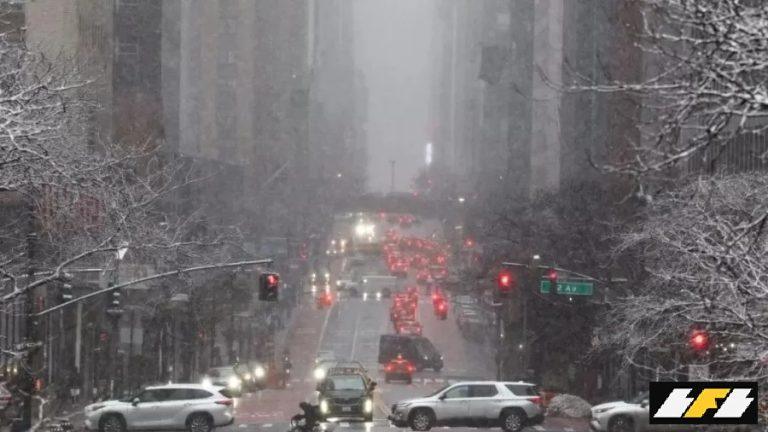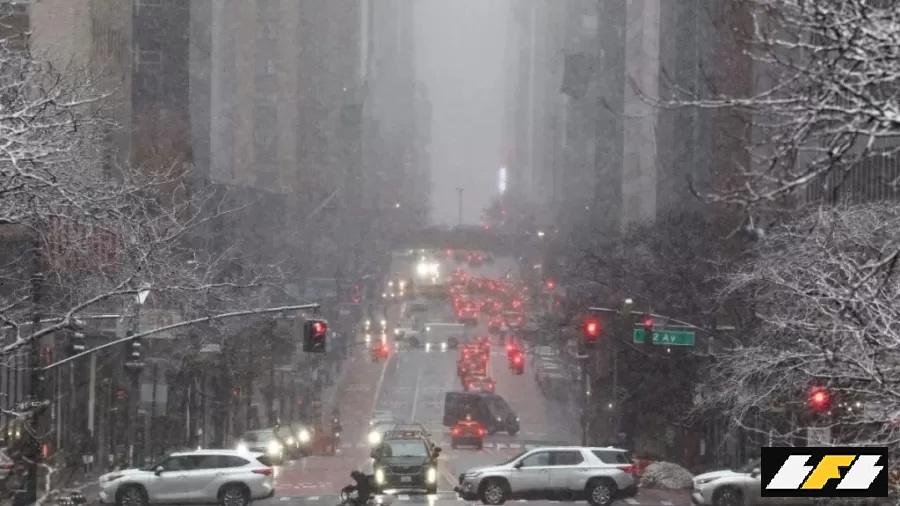

New York City Mayor Zohran Mamdani announced on Sunday (22) a temporary curfew in the metropolis of more than eight million inhabitants in the face of the imminent arrival of a violent snowstorm.
“New York City hasn’t faced a storm of this magnitude in the last decade,” Mamdani warned at a press conference, urging residents to “avoid all non-essential travel.”
Given the extreme weather conditions predicted, which include heavy snowfalls and strong winds, the most populous city in the United States has declared a state of emergency and will implement “a curfew from 9:00 p.m. tonight until noon tomorrow,” Monday, it announced
This will result in “the closure of city streets, roads and bridges to general traffic, whether cars, trucks, scooters or electric bicycles,” he clarified. Only “some essential and urgent trips will be allowed.”
Up to 70 cm of snow
New York authorities predict that weather conditions will worsen throughout Sunday and project significant snowfall overnight and into Monday
Between 45 and 60 cm of snow is expected in the city, potentially reaching up to 70 cm in some areas, along with strong winds.
Schools and colleges will be closed on Monday, and the city will mobilize resources and means to help people who need shelter, Mamdani explained.
The Big Apple isn’t the only one affected. Much of the northeast coast is also on alert
New Jersey Governor Mikie Sherrill declared a state of emergency starting at noon on Sunday, which frees up resources and allows for the rapid deployment of resources to address the weather crisis.
In Boston, they are also preparing for extreme weather conditions, and a “snow alert” has been declared. Up to 60 cm of snow is expected there, Mayor Michelle Wu indicated on Sunday, adding that this storm will be “of historic magnitude.”

The National Weather Service (NWS) warned on Sunday of “heavy snowfall, strong winds and coastal flooding” due to a “major winter storm”.
He added that snowy conditions would “materialize rapidly” from Maryland to southeastern New England, making travel “extremely dangerous.”
Snow could fall at a rate of five to eight centimeters per hour at the storm’s peak, with nearly 54 million people in its path, he added.
The conditions could cause power outages and make travel impossible “along Interstate 95, from north Baltimore to Boston,” which also connects New York and Philadelphia, the NWS reported.
This Sunday, more than 3,500 flights had already been canceled, according to the specialized website FlightAware, with New York airports among the most affected.
A severe winter storm had already hit the region at the end of January, causing, according to authorities, more than one hundred deaths.


About the Author